
Stone Patio & Fire Pit Ideas for Cozy Nights
When the temperature drops, a well‑designed stone patio becomes the heart of an outdoor gathering. The right combination of materials, layout, and ambience can turn a simple slab of stone into a welcoming stage for conversation, food, and the gentle glow of a fire. Below are seven thoughtfully curated ideas that show how stone and fire can work together to create comfortable evenings without sacrificing style or practicality.
1. Layered Flagstone with a Central Gas Fire Bowl

Start with a base of irregular flagstone, laid in a herringbone pattern that adds visual interest while allowing water to drain naturally. In the middle, install a low‑profile gas fire bowl set flush with the stone surface. The bowl’s stainless‑steel ring reflects the flames, amplifying warmth across the surrounding seats. Because the fire source sits at floor level, you can place low‑back lounge chairs or a sectional directly around it without obstructing the view.
Choosing a gas model means you avoid the mess of wood ash and can control the flame with a simple remote. The trade‑off is a modest upfront cost for the burner and the need for a nearby gas line, which may require a professional installer. To keep the flagstone looking fresh, sweep debris regularly and rinse with a garden hose after heavy rain; a stone‑specific sealant applied annually helps prevent staining.
The overall effect is a seamless blend of natural texture and modern convenience, perfect for evenings when you want warmth without the effort of tending a wood fire.
2. Rustic Slate Deck with a Portable Wood‑Burning Fire Pit
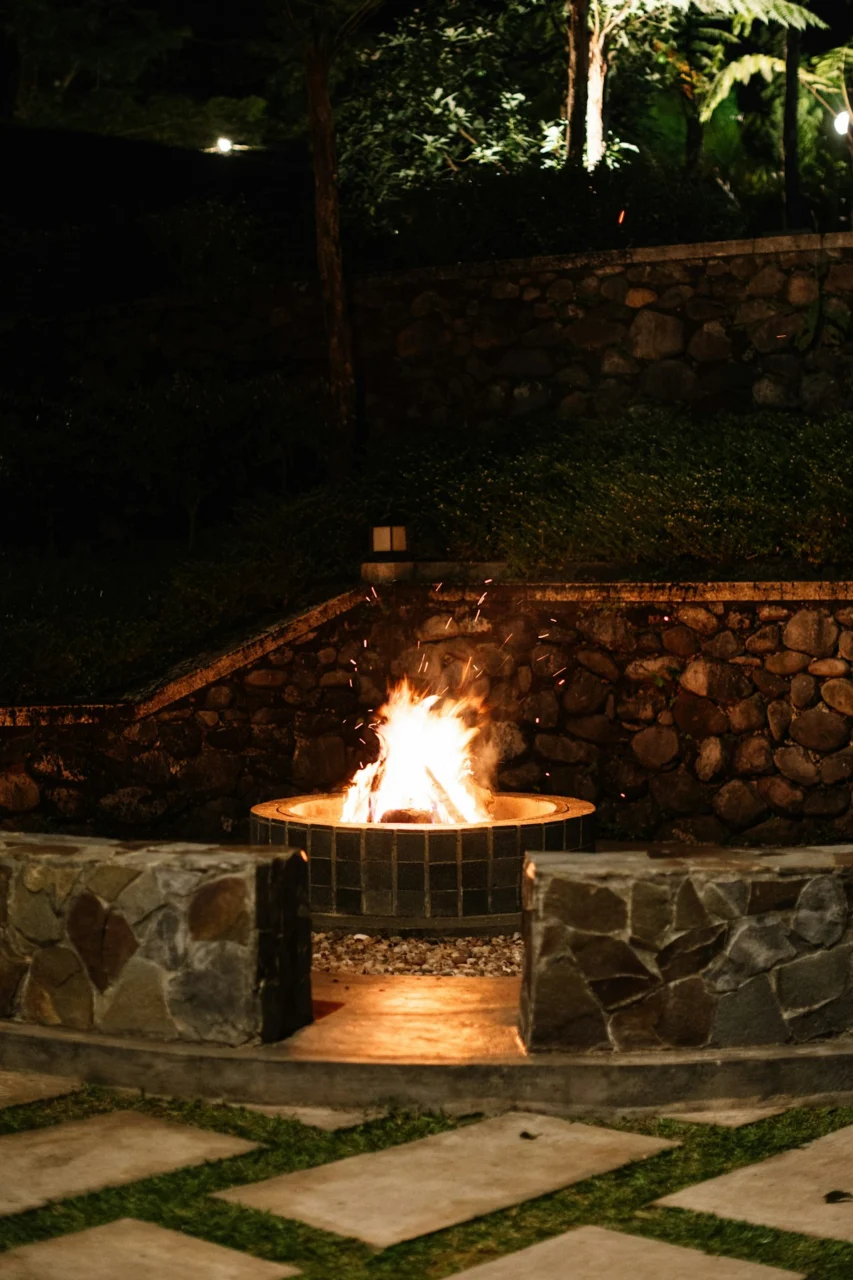
Photo by Ichsan Chairul on Unsplash
A slate deck offers a dark, matte backdrop that makes the orange of a wood‑burning fire pit pop. Lay the slate in a simple running bond to keep the surface level and easy to walk on, then position a portable fire pit on one side of the deck. Because the pit is movable, you can rearrange seating or store it under a weather‑proof cover when not in use.
The rustic look works especially well with reclaimed timber benches and woven jute rugs that soften the stone’s coolness. One consideration is the need for a fire‑safe clearance: place the pit at least three feet from any combustible material and use a fire‑proof mat beneath it. Regularly removing ash and checking for cracks in the slate will extend its life.
This arrangement lets you enjoy the authentic crackle of wood while retaining the flexibility to change the patio’s layout for different gatherings.
3. Stacked Concrete Pavers Forming a Fire‑Ring Seating Area

Photo by Bia Monteiro on Unsplash
Stacked concrete pavers create a low wall that doubles as a fire‑ring boundary and a built‑in bench. Arrange the pavers in a circular or octagonal shape, leaving a central opening for a compact electric fire table. The concrete’s cool gray tone pairs nicely with teal or deep navy cushions, adding a splash of color without overwhelming the stone.
Electric fire tables produce consistent heat and eliminate the need for fuel storage, making them ideal for apartments or homes with strict fire codes. However, they rely on electricity, so you’ll need a nearby outlet or outdoor‑rated extension cord. The concrete wall can be sealed with a penetrating sealant to resist moisture and prevent weed growth in the joints.
By integrating seating into the stonework, you free up floor space and create an intimate conversation zone that feels both intentional and low‑maintenance.
4. River Rock Border Around a Built‑In Stone Fireplace

Photo by Valkyrie Pierce on Unsplash
For a more permanent installation, consider a built‑in stone fireplace set into a retaining wall of river rock. The smooth, rounded stones form a natural border that guides the eye toward the hearth while providing a tactile contrast to the rougher fireplace blocks. Surround the fireplace with a mix of low‑profile armchairs and a woven outdoor sofa, allowing guests to settle at varying distances from the heat.
The river rock acts as a buffer against wind, helping to retain warmth on breezy nights. Installing a vented chimney ensures proper exhaust, but it adds complexity and may require a professional mason. Maintenance involves occasional rinsing of the rock to remove dust and checking the mortar joints for signs of wear.
This design brings a sense of permanence and a subtle, organic elegance that blends the fire’s energy with the surrounding landscape.
5. Mixed‑Material Patio Using Limestone and a Steel Fire Pit

Photo by Angela Bailey on Unsplash
Limestone’s light, creamy hue creates an airy foundation for a patio that feels open even after sunset. Lay the limestone in a tight, grid pattern to emphasize its uniformity, then anchor a sleek steel fire pit at one corner. The metal’s brushed finish reflects the flames, adding a subtle gleam that complements the stone’s softness.
Because limestone is porous, applying a breathable sealant protects it from oil stains and moisture penetration. The steel fire pit can run on propane, offering adjustable flame heights for different weather conditions. One drawback is the potential for the steel to become hot to the touch, so a heat‑resistant mat beneath the pit is advisable.
The combination of light stone and dark metal creates a balanced visual contrast, making the space feel both refined and inviting for evening gatherings.
6. Cobblestone Courtyard with a Sunken Fire Pit

Photo by tommao wang on Unsplash
Lay traditional cobblestones in a slightly recessed area to form a courtyard that naturally channels foot traffic toward a sunken fire pit. The pit’s lower level encourages a sense of enclosure, allowing heat to rise gently and fill the surrounding space. Surround the rim with built‑in planters filled with aromatic herbs like rosemary or sage, which release fragrance when warmed by the fire.
Since the pit sits below grade, ensure proper drainage by sloping the surrounding cobblestones away from the center and installing a French drain if water tends to collect. The sunken design can feel cozy, but it may limit wheelchair access, so consider a ramp or a level alternative if accessibility is a concern.
When the fire is lit, the courtyard becomes a fragrant, intimate nook where conversation flows naturally around the stone walls.
7. Granite Slab Patio with a Minimalist Linear Fire Feature
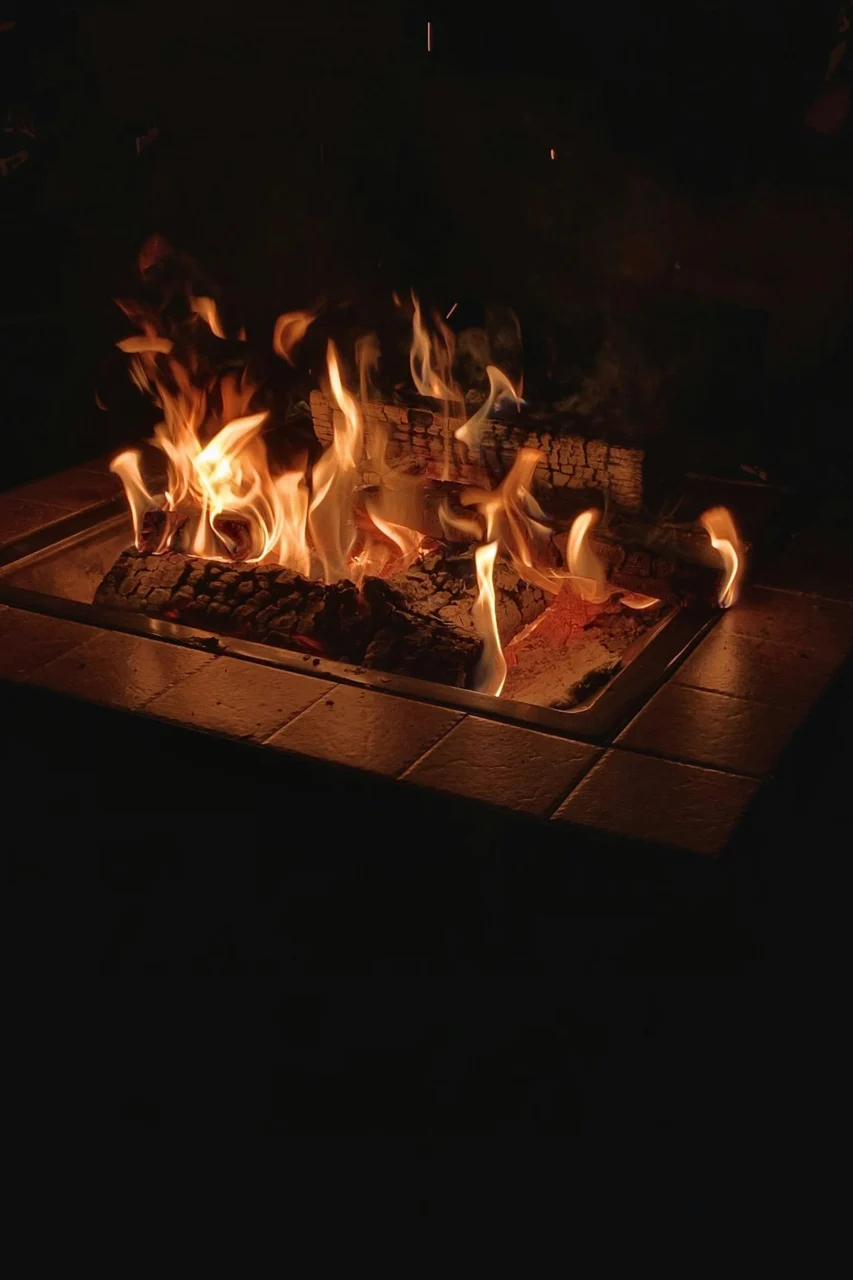
Cover the patio with large, polished granite slabs that reflect ambient light, giving the area a subtle sheen even after dark. Install a linear fire feature—essentially a narrow, rectangular burner—set flush with the granite surface. This sleek element emits a thin ribbon of flame that runs parallel to the seating, creating a modern focal point without dominating the space.
Granite is highly durable and resists scratches, but it can be expensive and heavy, requiring a solid sub‑base during installation. The linear fire feature typically runs on natural gas, providing consistent heat with minimal visual clutter. A downside is the limited heat radius; it works best for small groups seated close to the flame.
Pair the granite with low‑profile metal chairs and a few potted succulents for a contemporary look that feels both polished and comfortable for relaxed evenings.
FAQ
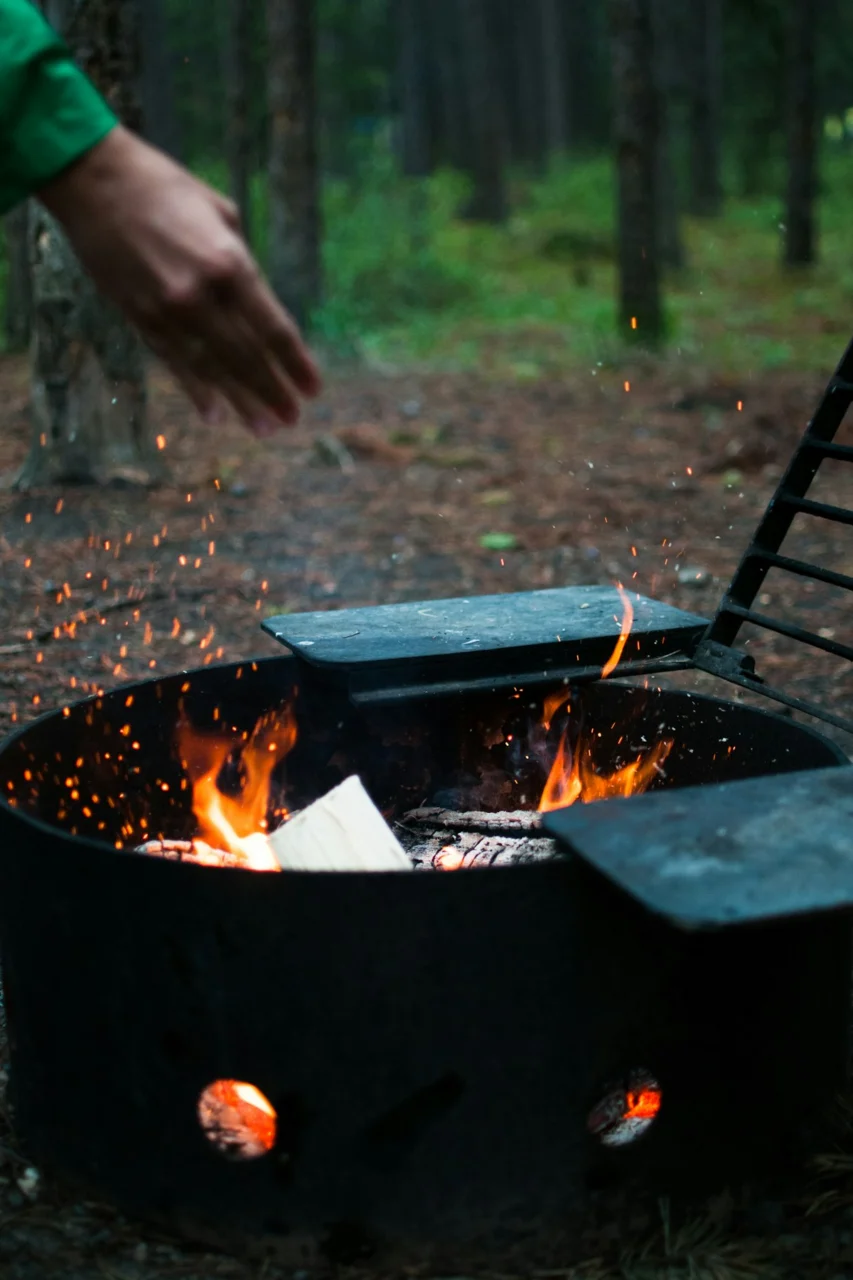
Photo by Ezra Jeffrey-Comeau on Unsplash
How far should a fire pit be from furniture?
Maintain at least three feet of clearance between the fire pit and any combustible furniture or décor. This distance reduces the risk of heat damage and allows guests to move comfortably around the fire.
Can I use a wood‑burning fire pit on a stone patio?
Yes, but you need a fire‑proof mat or a layer of sand beneath the pit to protect the stone from direct heat. Regularly remove ash and check the stone for cracks that could develop from repeated exposure.
Is a gas fire pit safer than a wood fire pit?
Gas fire pits are generally safer because they produce a clean flame with no sparks or embers. They also eliminate the need for storing firewood, though you still need to follow local codes and ensure proper ventilation.
What maintenance does limestone require?
Limestone should be sealed with a breathable stone sealer every year to prevent stains and moisture absorption. Clean it with a mild pH‑neutral detergent and a soft brush; avoid acidic cleaners that can etch the surface.
Do electric fire tables need a dedicated circuit?
Most outdoor‑rated electric fire tables draw modest power and can be plugged into a standard GFCI‑protected outlet. If you plan to use multiple high‑wattage appliances nearby, consult an electrician about circuit capacity.
Final Thoughts

Photo by Arlind Photography on Unsplash
Designing a stone patio with a fire feature is less about following a formula and more about balancing texture, heat, and movement. Whether you favor the rustic charm of a portable wood pit or the sleek precision of a linear gas burner, each choice brings its own set of benefits and considerations. By paying attention to material durability, safety clearances, and the way furniture interacts with the flame, you can craft an outdoor space that feels welcoming long after the sun sets. Let the stone’s natural sturdiness and the fire’s gentle glow guide you toward evenings that are both comfortable and memorable.