

Finding a way to make a tiny laundry room feel bright and useful is a fun challenge. This post offers laundry room ideas that add style, storage, and calm without crowding the space.
Before you start, take a quick inventory of what you already have. Measure the walls, note where the plumbing sits, and think about the vibe you want—clean and airy, warm and cozy, or a mix of both.
1. Light‑Colored Cabinets and Open Shelves
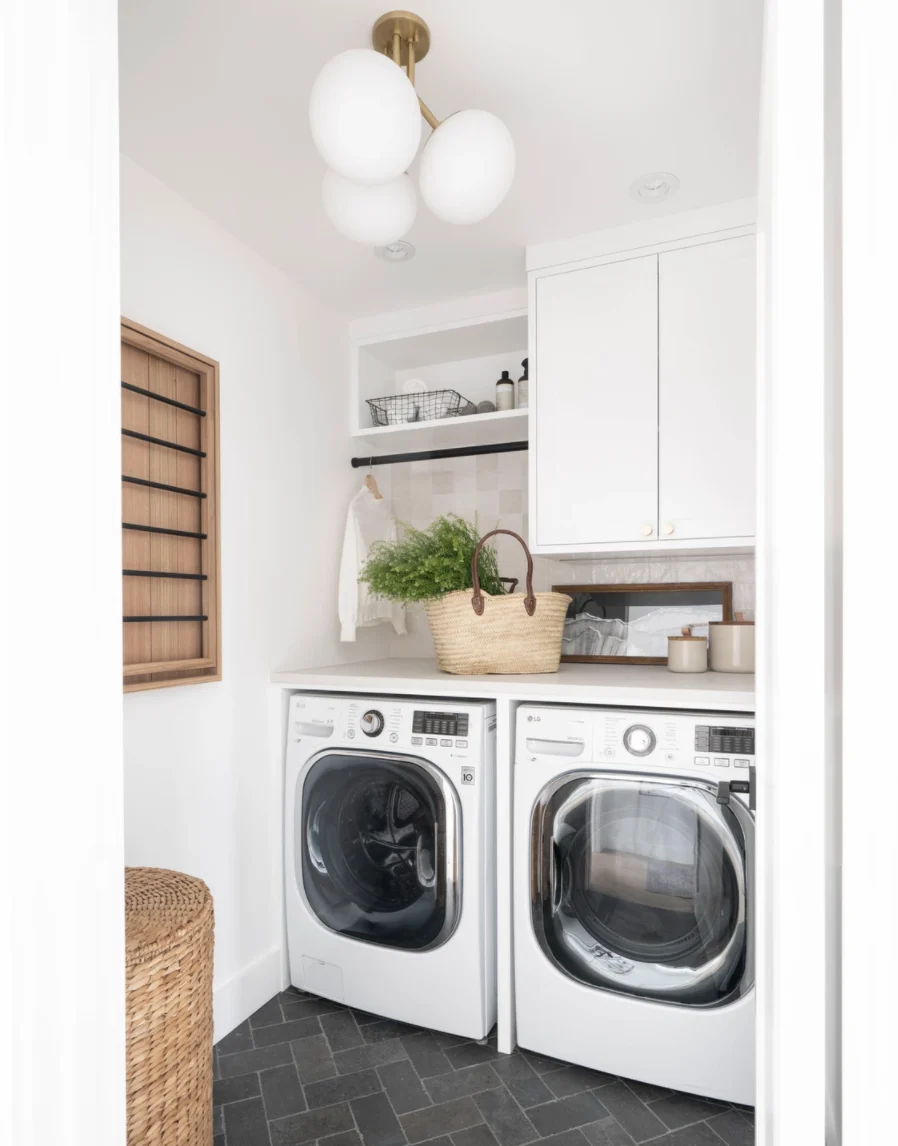
Soft white or pale gray cabinets can make a small room feel larger. The light tone reflects natural light, keeping the space bright even on cloudy days. Pair the cabinets with a few open wooden shelves to break up the solid surface.
Begin by removing any dark upper cabinets you already have. Paint them with a low‑sheen chalk paint in a light shade, or replace them with new ready‑to‑assemble units.
Next, install two or three floating shelves about waist height. Choose a light oak or pine that matches the cabinet finish. Keep the shelves uncluttered; a few baskets or a small plant works well.
One thing to watch is that light paint shows dust more quickly. A quick weekly wipe with a dry cloth will keep the finish looking fresh.
2. A Stackable Washer‑Dryer Set
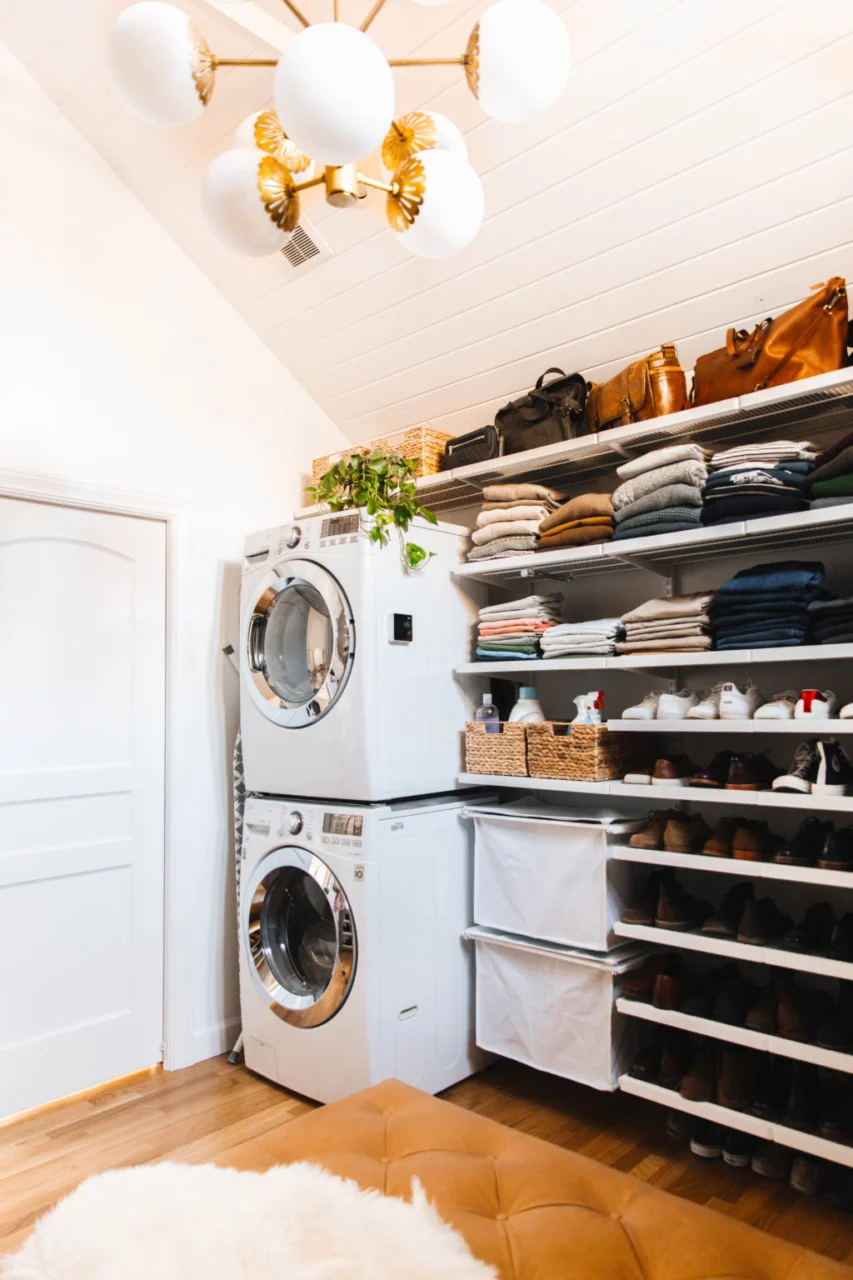
Stackable machines free up floor space and give the room a sleek look. The vertical arrangement leaves room for a countertop or a narrow cabinet beneath.
Measure the height of the space and choose a set that fits with a few inches to spare for ventilation. Most models come with a built‑in vent that can be routed to the wall.
Place a thin laminate or quartz slab on top of the dryer. A 12‑inch deep countertop can hold detergent, a small basket, and a decorative tray.
Remember that the stack may be harder to reach for tall users. Adding a small step stool nearby can solve the issue.
3. Pull‑Out Laundry Baskets
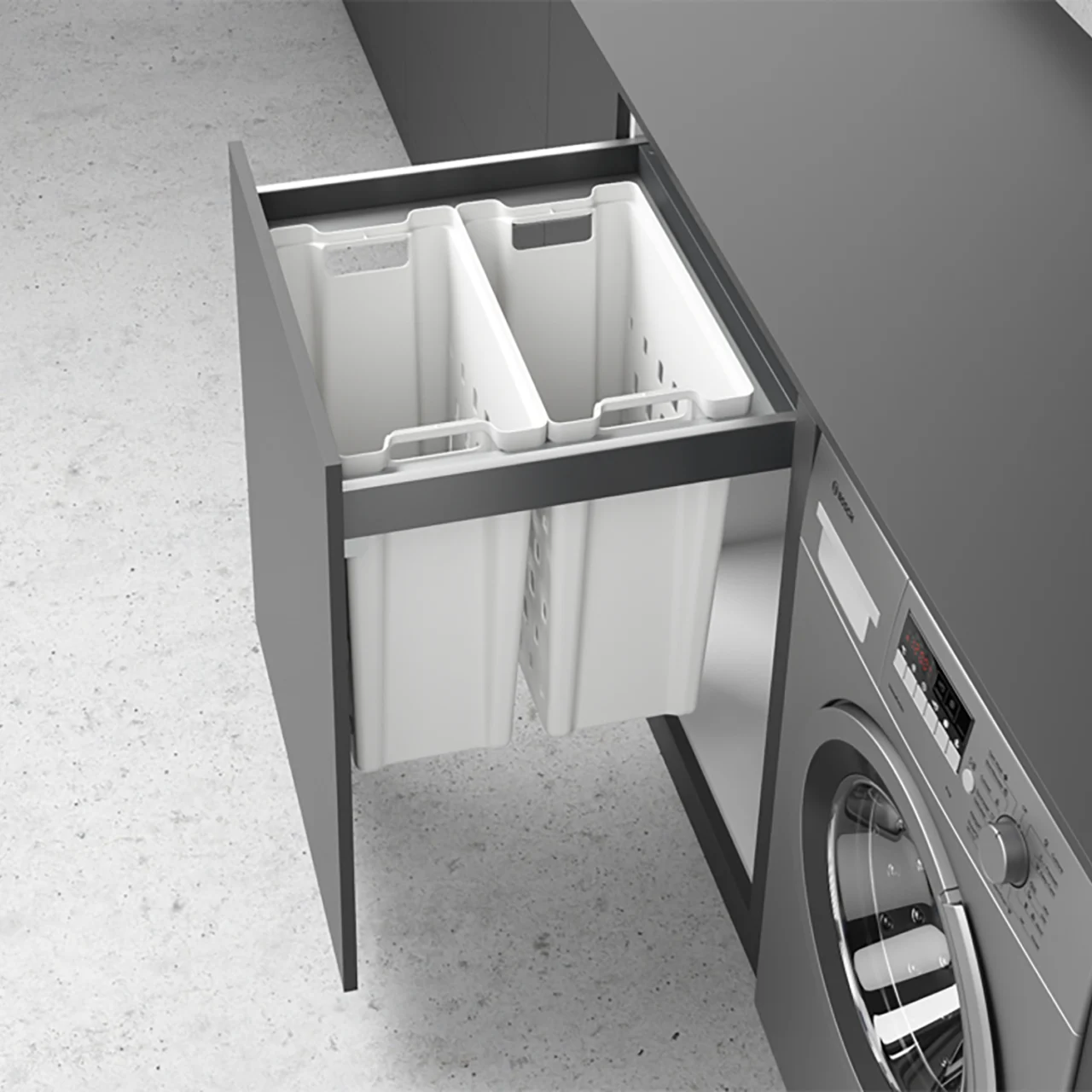
Pull‑out baskets hide dirty clothes while keeping the floor clear. They slide out like a drawer, letting you load and unload without bending over.
Start by measuring the width of the base cabinets. Order two narrow pull‑out bins that fit inside the cabinet depth.
Install the bins on heavy‑duty slides and add simple handles. Choose a fabric liner that can be removed for washing.
The main downside is that the bins take up some cabinet depth, so you lose a little shelf space. Plan for that by storing only the essentials inside.
4. A Fold‑Down Drying Rack

A wall‑mounted folding rack lets you air‑dry delicate items without using a bulky stand. When folded up, it sits flat against the wall, leaving room for a chair or a small table.
Find a spot near the washer where the rack can swing down without hitting the door. Secure the brackets with wall anchors that match the wall type.
Choose a rack made of stainless steel or coated wood to resist rust. Make sure the arms extend at least 30 inches for larger garments.
If the wall is plaster, the anchors may need extra support, which can add a bit of work and cost.
5. Bright Tile Backsplash

A colorful tile splash adds personality and protects the wall from splashes. Small mosaic tiles in pastel shades can create a gentle pattern without overwhelming the room.
Pick a tile that is 2‑by‑2 inches and lay it in a simple offset grid. Use a thin‑set mortar and let it cure for 24 hours before grouting.
Choose a light‑gray grout to keep the look soft and easy to clean. Seal the grout after it dries to prevent stains.
Tiles can be cold to the touch, so consider a small rug on the floor if you stand there often.
6. Under‑Cabinet LED Lighting

Soft LED strips under the cabinets add a warm glow and help you see the countertop. The light also makes the room feel larger by adding depth.
Measure the length of the cabinet underside and buy a dimmable LED strip that matches. Most strips have a peel‑and‑stick back for easy installation.
Plug the strip into an outlet with a timer, or connect it to a switch near the door. Aim the light toward the work surface for even illumination.
LED strips can get hot if left on for long periods, so set a timer to turn them off after use.
7. A Small Folding Table
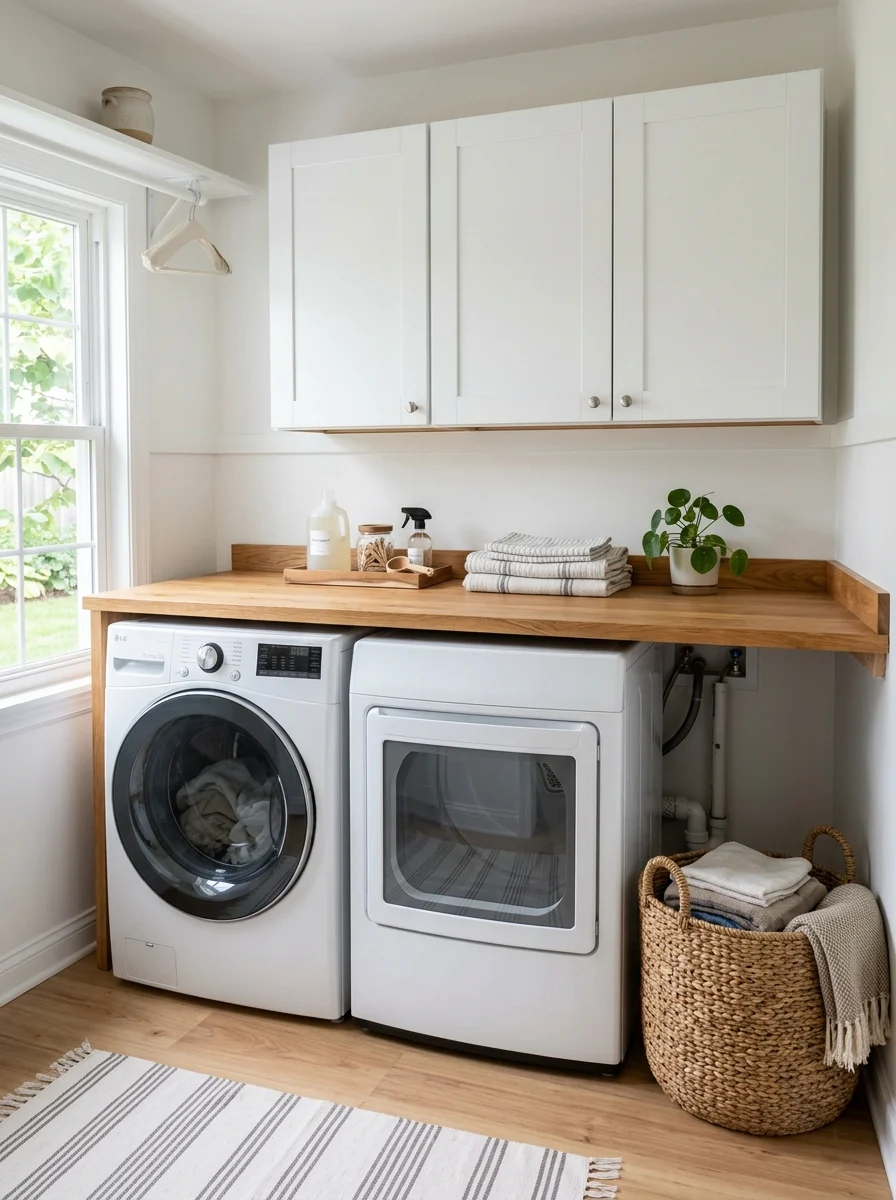
A narrow folding table gives you a place to sort clothes or iron without taking up permanent space. When not in use, it folds flat against the wall.
Choose a table about 24 inches wide and 36 inches long. Look for a model with sturdy legs that lock in place.
Mount a simple wall bracket to hold the table when folded. Keep a few clothespins and a small ironing board nearby for quick access.
The table may feel a bit cramped for large items, so use it mainly for socks, shirts, and small accessories.
8. Open‑Concept Laundry Nook
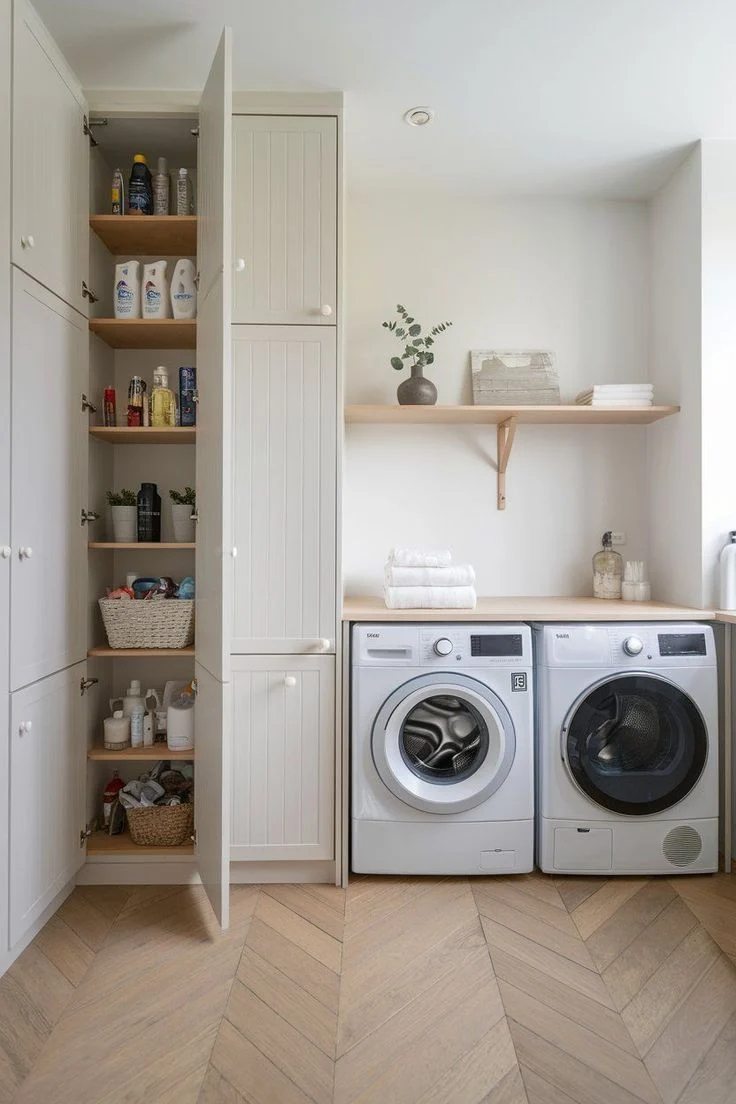
If you have a small alcove, turn it into a dedicated laundry nook. Adding a short wall or a curtain can separate the area without closing it off.
Install a short half‑wall of painted plywood at about 48 inches high. Paint it the same color as the cabinets to keep the look seamless.
Hang a fabric curtain on a simple rod to hide the machines when you want privacy. Choose a light, washable fabric that matches the room’s palette.
The half‑wall can make the room feel a bit tighter, so keep the rest of the space open and airy.
9. Greenery for Fresh Air
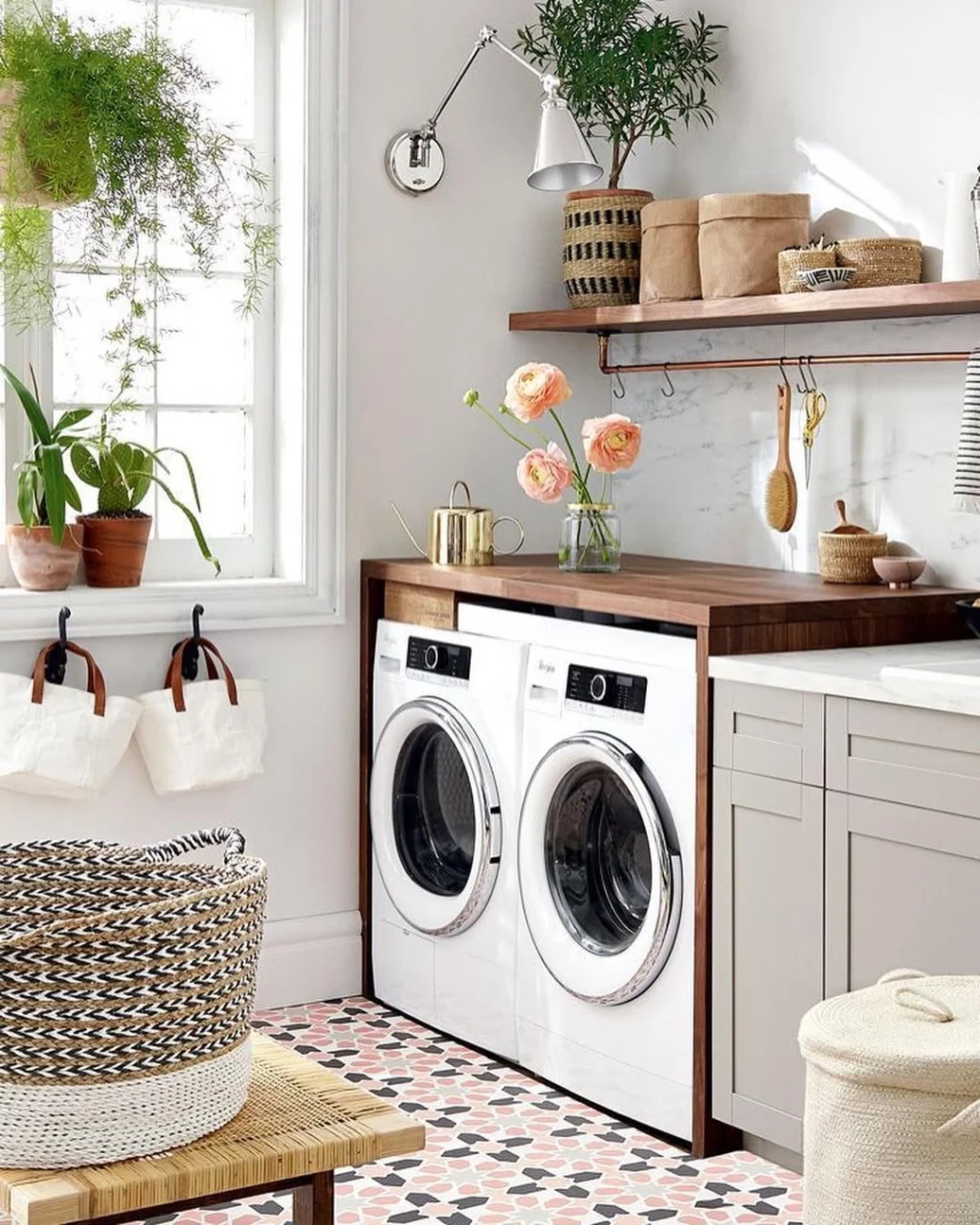
A small potted plant adds a touch of nature and helps improve air quality. Ferns, spider plants, or pothos thrive in the humid environment of a laundry room.
Pick a pot that fits on the countertop or a shelf. Use a saucer to catch any water that may drip.
Place the plant where it gets indirect light, such as near a window or under a skylight. Water it once a week, or when the soil feels dry.
Be aware that some plants can attract pests if over‑watered, so avoid leaving standing water.
FAQ
How can I make a tiny laundry room feel brighter?
Use light paint colors on walls and cabinets. Add under‑cabinet LED lights and keep surfaces clear of clutter.
What is the best way to store laundry supplies in a small space?
Pull‑out baskets or narrow cabinets work well. Keep only the items you use often and store extras elsewhere.
Can I install a folding drying rack without drilling into tile?
Yes, use strong adhesive hooks designed for tile. Make sure the hooks can hold the weight of wet clothes.
Is a stackable washer‑dryer set safe for older homes?
It is safe if you follow the manufacturer’s venting instructions. Have a qualified plumber check the water connections if you are unsure.
What plants survive well in a humid laundry room?
Spider plants, pothos, and Boston ferns love humidity. Keep them out of direct sunlight and water them modestly.


Leave a Reply